


Role of Trust in Gold Investment Strategies
- Shannon B
- Feb 20
- 11 min read


Finding reliable ways to protect wealth becomes a priority when global markets shift and traditional assets lose stability. For high-net-worth individuals and institutional investors, building confidence in gold investment means more than trusting a dealer. It requires assurance in market transparency and structured risk controls. This article explains how structural trust, counterparty trust, and supply chain integrity work together to create a transparent foundation for gold trading strategies that truly mitigate portfolio risks.
Table of Contents
Key Takeaways
Point | Details |
Trust Dimensions in Gold | Trust encompasses structural trust, which relies on market infrastructure, and counterparty trust, which focuses on the integrity of dealers and custodians. |
Importance of Transparency | Transparent pricing and processes foster investor confidence, accelerating capital deployment and decision-making. |
Supply Chain Integrity | Ensuring supply chain transparency is crucial to mitigate risks related to conflict gold and regulatory violations. |
Impact of Trust Failures | Trust breaches can distort market pricing and lead to significant loss of investor capital, with long-term repercussions for the entire market. |
Defining Trust in Gold Investment Markets
Trust in gold investment markets operates differently than trust in typical financial relationships. It’s not just about believing a broker won’t steal your money—it runs deeper into confidence that gold maintains its value and that markets function fairly.
At its core, trust in financial interactions depends on the belief that all parties will act reliably and truthfully. When you invest in gold, you’re placing confidence in multiple actors: refiners who authenticate purity, dealers who quote fair prices, and custodians who secure your holdings.
The Two Dimensions of Gold Investment Trust
Trust operates on two distinct levels in gold markets:
Structural trust: Confidence that market infrastructure—regulatory oversight, supply chains, storage systems—functions as intended
Counterparty trust: Belief that your dealer, broker, or custodian will execute transactions fairly and protect your interests
Structural trust crumbles during geopolitical instability or economic turmoil. That’s when investors flood into gold. Gold’s role as a safe-haven asset reveals how trust in government currencies or equities can evaporate quickly, redirecting capital toward precious metals.
Why Trust Matters More in Gold Than Other Assets
Unlike stocks, you can’t easily verify gold’s value through quarterly earnings reports or analyst consensus. Physical gold’s value depends almost entirely on market perception and global monetary conditions.
Trust in gold operates at the intersection of monetary policy, geopolitics, and mining output. When central banks expand money supply or political tensions rise, investor confidence in paper assets weakens—and trust in gold strengthens accordingly.
For high-net-worth investors, this distinction matters enormously. Your portfolio’s resilience depends on whether you can truly trust gold will preserve value when other assets fail.
Trust and Advisor Credibility
Financial advisors recommending gold strategies vary dramatically in trustworthiness. Some push gold aggressively for commissions; others understand it as a legitimate portfolio hedge. Finding advisors with demonstrated transparency about costs, conflict of interest disclosures, and realistic return expectations separates sound guidance from hype.
Your advisor should explain why gold fits your specific situation—not just sell you generic allocations everyone else holds.
Trust in gold investment succeeds when market infrastructure is transparent, counterparties act with integrity, and advisors prioritize your objectives over their commissions.
Pro tip: Before committing capital to any gold investment strategy, verify your custodian’s third-party audit reports and examine whether your advisor discloses all fees upfront—this single step eliminates most trust-related risks.
Types of Trust: Custodial, Counterparty, and Regulatory
Gold investment requires trust across three distinct domains. Each one protects your capital in different ways, and weakness in any single domain can expose you to significant risk. Understanding these types prevents blind spots in your investment strategy.
Here is a comparison of key trust domains in gold investment and their most common risk exposures:
Domain | Core Purpose | Main Risk Exposure | Impact If Fails |
Custodial Trust | Safekeeping and secure storage | Theft or asset mismanagement | Loss of holdings or access |
Counterparty Trust | Fair transactions and solvency | Fraud or default | Losses, frozen capital |
Regulatory Trust | Rule enforcement and protections | Regulatory failure | Fraud, market instability |
Custodial Trust: Safekeeping Your Gold
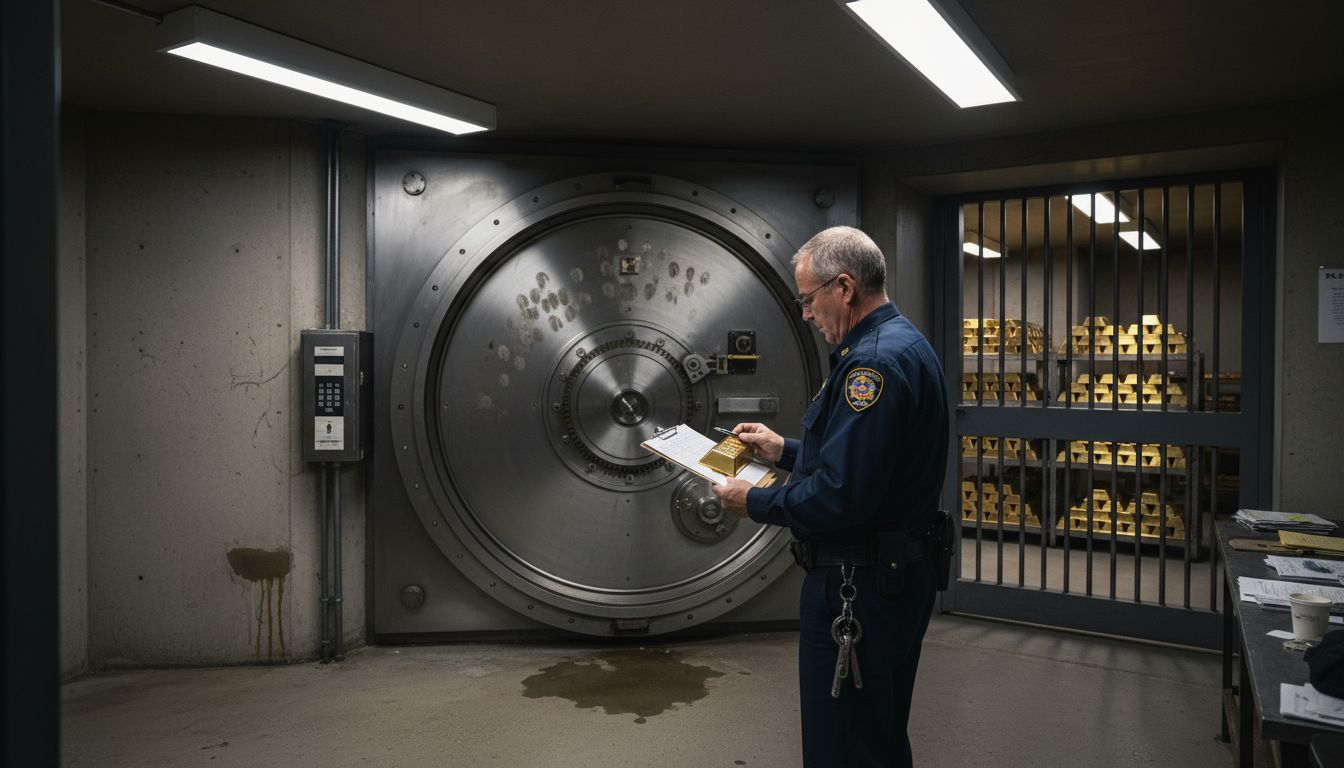
Custodial trust answers a simple question: Will the organization holding your gold actually return it to you? This forms the foundation of physical gold ownership for institutional and high-net-worth investors.
When you hold gold in custody, you depend on:
Vault security: Physical infrastructure preventing theft or unauthorized access
Insurance coverage: Protection if theft or loss occurs despite security measures
Audit verification: Regular third-party confirmation that your gold exists and remains pure
Segregation: Assurance that your gold isn’t commingled with other investors’ holdings
A custodian with poor track record, inadequate insurance, or limited audit transparency creates unnecessary exposure. This isn’t about paranoia—it’s about verifying systems that prevent loss.
Counterparty Trust: Creditworthiness of Market Participants
Counterparty trust addresses creditworthiness of dealers, brokers, and refiners you interact with. When a dealer quotes you a price, you’re trusting their solvency and honesty. When a refiner authenticates gold purity, you’re betting their testing standards are legitimate.
For institutional investors, counterparty risk can be material:
Dealer insolvency: Can trap your capital or force asset liquidation at unfavorable prices
Pricing manipulation: Unscrupulous dealers might quote wider spreads during market stress
Authentication fraud: Refined gold that’s counterfeit or lower purity than certified
Settlement delays: Inability to execute or receive deliveries when promised
This is why reputation, capitalization, and trading volumes matter. Established dealers with transparent operations and regulatory oversight reduce counterparty risk significantly.
Regulatory Trust: Rule Enforcement and Investor Protection
Regulatory trust concerns whether government or industry bodies actually enforce rules that protect you. A perfect rulebook means nothing if authorities ignore violations.
Regulatory frameworks should include:
Standards compliance: Enforced purity standards and weight certifications
Transaction transparency: Requirements for dealers to disclose pricing and fees
Dispute resolution: Mechanisms to address grievances if parties don’t perform
Prudential oversight: Supervision preventing dealers from excessive leverage or fraud
Investors in jurisdictions with weak regulatory enforcement face higher risk. Gold purchased through dealers in transparent markets with strong oversight provides better protection than equivalent transactions in unregulated environments.
Financial market trust operates through institutions, intermediaries, and regulatory frameworks—each layer reduces risk and promotes stable investment in gold.
Pro tip: Evaluate your gold holdings across all three dimensions: verify your custodian’s insurance and audit reports, research your dealer’s regulatory standing and capitalization, and confirm your market operates under transparent, enforced rules.
How Transparency Shapes Gold Trading Decisions
Transparency directly influences whether you move capital into gold or hesitate at the entry point. When pricing is opaque, spreads are hidden, and processes are unclear, institutional investors simply walk away. Clear information removes friction and builds confidence.
The shift toward transparent gold instruments demonstrates this principle clearly. Modern gold markets have increasingly adopted transparent instruments like ETFs and Sovereign Gold Bonds, which provide standardized pricing and regulatory oversight. These vehicles lower entry barriers and enhance liquidity by allowing investors to understand exactly what they’re buying and at what cost.
Why Transparency Matters for Your Trading Decisions
Transparency reduces two critical friction points: uncertainty and hidden costs. Without it, you’re essentially making decisions with incomplete information.
Clear pricing information allows you to:
Compare execution costs across multiple dealers without surprises
Understand fee structures upfront instead of discovering them during settlement
Verify gold specifications before committing capital
Track market prices independently rather than relying solely on broker quotes
When you can’t see these details, you’re forced to trust blindly. High-net-worth investors reject that proposition.
The Impact on Capital Deployment Speed
Transparency accelerates decision-making. Institutional investors moving large positions need confidence their execution won’t experience unexpected slippage or hidden costs eating into returns.
With transparent frameworks, you can execute larger positions faster because research and due diligence move quicker. You’re verifying systems and processes rather than investigating whether counterparties are trustworthy. The difference in deployment speed between transparent and opaque markets can determine whether you capture favorable market windows.
Understanding operational mechanics of physical gold trading helps you recognize which dealers operate with genuine transparency versus surface-level disclosure.
Building Confidence Through Disclosure Standards
Transparent markets establish disclosure standards that become competitive minimums. Dealers who hide information lose market share to those offering clear pricing and processes. This competitive pressure drives industry-wide improvement.
Look for dealers and platforms that disclose:
Real-time or near-real-time pricing benchmarked to global spot prices
Complete fee schedules broken into components (storage, insurance, administration)
Regular audit reports from independent third parties
Clear settlement timelines and delivery procedures
Segregation confirmation for your specific holdings
This information lets you evaluate whether trading relationships serve your interests or the dealer’s.
The following table summarizes how transparency benefits investors in modern gold markets:
Transparency Aspect | How It Helps Investors | Common Outcome |
Fee Disclosure | Reveals true costs upfront | Fewer hidden charges |
Audit Availability | Confirms gold holdings exist | Reduces risk of fraud |
Real-Time Pricing | Enables fair price comparison | Better execution, confidence |
Clear Settlement Process | Ensures timely delivery | Reduced transaction delays |
Transparent gold trading markets lower entry barriers, enhance liquidity, and enable confident decision-making—removing the friction that keeps capital on the sidelines.
Pro tip: Request full fee transparency and current audit reports from any gold dealer before moving capital; dealers willing to provide these documents upfront typically operate with institutional-grade integrity, while those deflecting questions signal avoidable risk.
Supply Chain Integrity and Risk Controls in Gold
Gold’s value as a trusted asset depends entirely on supply chain integrity. If you can’t verify where gold comes from or trust the refining process, you’re holding a commodity with questionable provenance. This matters more than most investors realize.
The global gold supply chain spans mining operations across multiple continents, refineries with varying standards, and dealers operating in different regulatory environments. The complex gold supply chain requires stringent risk controls to mitigate geopolitical, environmental, and operational risks. Without proper controls, gold can carry hidden exposure to conflict financing, environmental damage, or regulatory violations.
Why Supply Chain Transparency Matters to Your Portfolio
You’re not just buying metal—you’re buying the entire chain of custody from mine to vault. Weak links anywhere expose you to reputational and regulatory risk.
Key supply chain concerns include:
Conflict gold: Gold mined in regions financing armed conflict or human rights violations
Environmental liability: Gold extracted through practices causing environmental damage, creating future regulatory exposure
Refinement standards: Gold refined to varying purity levels without consistent verification
Documentation gaps: Inability to trace gold’s origin through complete transaction records
Regulatory compliance: Gold sourced from jurisdictions or entities subject to sanctions
Institutional investors and fiduciaries increasingly face obligations to verify supply chain compliance. This isn’t optional—it’s a governance requirement.
Certification Schemes and Verification Standards
Reputable certification programs provide the transparency institutional investors demand. These schemes trace gold from source through refining to final custody, creating verifiable documentation.
Look for gold certified through:
London Bullion Market Association (LBMA) responsible sourcing standards
World Gold Council conflict-free mining verification
Chain of Custody documentation linking specific gold bars to their origins
Third-party audit confirmations from independent assayers
These certifications cost refiners and dealers money to maintain. Institutions willing to pay for certified gold demonstrate commitment to responsible sourcing. When managing risk in gold investment strategies, supply chain verification should rank alongside custodial and counterparty controls.
Operational Risk Controls in the Supply Chain
Beyond ethical sourcing, operational controls prevent fraud and ensure accurate specifications. Each transaction point introduces risk—mining, transport, refining, assay, storage.
Risk controls should include:
Regular assays by independent laboratories confirming purity
Transport insurance and security protocols preventing loss or theft
Segregation records confirming your gold remains separate and identifiable
Documentation trails allowing complete traceability if needed for regulatory purposes
Ensuring supply chain integrity through certification and transparent reporting protects gold’s role as a trusted safe-haven asset while safeguarding your portfolio from hidden compliance risks.
Pro tip: Require your gold dealer to provide LBMA certification or equivalent responsible sourcing documentation for any gold purchase; this single requirement eliminates most supply chain risks and protects your fiduciary standing.
Trust Missteps and Their Impact on Investor Returns
Trust failures in gold markets don’t just damage relationships—they destroy returns. When dealers misrepresent gold, auditors fail to catch fraud, or supply chains harbor hidden violations, investors pay the price through lost capital and diminished confidence.
The consequences compound quickly. Trust breaches in gold markets undermine investor confidence and result in decreased investment returns. A single scandal can trigger capital flight, creating volatility that punishes even those who weren’t directly defrauded. Institutional investors withdraw. Retail investors panic-sell. Markets contract.
The Financial Cost of Trust Failures
Trust missteps create tangible economic damage. You can measure it in basis points lost and capital withdrawn from the market.
Common trust failures and their consequences:
Dealer fraud: Misrepresentation of gold purity or weight, leading to hidden losses
Audit failures: Regulators or custodians missing obvious red flags until damage is severe
Supply chain violations: Discovering gold carries conflict or environmental liability after purchase
Pricing manipulation: Dealers quoting artificially wide spreads during market stress
Documentation gaps: Inability to prove segregation or ownership when needed
Each misstep increases the cost of doing business. Investors demand higher premiums to compensate for perceived risk. Due diligence costs skyrocket. Market liquidity dries up.
How Breaches Distort Market Pricing
Trust failures don’t just affect individual investors—they distort pricing across entire markets. When confidence erodes, so does liquidity. Buyers disappear, and sellers face wider bid-ask spreads.
Failures in maintaining trust result in tangible negative consequences including price distortions and significant loss of investor capital. A major custodial breach might trigger a 3-5% price dislocation as nervous investors exit positions simultaneously. That’s millions in losses across institutional portfolios.
The cultural attachment to gold as a safe haven amplifies these reactions. When people lose trust in gold itself, panic spreads faster than in other commodities.
The Recovery Problem
Regaining trust takes far longer than losing it. Markets remember. After a significant breach, even honest dealers face elevated skepticism and higher capital costs for years.
Investors demand:
Stricter audit requirements and increased audit frequency
Higher insurance coverage and lower custodial concentration
Enhanced transparency in pricing and fee disclosures
Third-party verification of all major transactions
These safeguards cost money, raising operational expenses and reducing returns for everyone. The breach victim pays the immediate cost. The entire market pays the longer-term cost through reduced efficiency and higher friction.
Trust breaches in gold markets don’t affect just victims—they diminish market credibility, increase costs for all participants, and ultimately distort pricing across the entire asset class.
Pro tip: After any significant trust failure in gold markets, institutional investors should increase audit frequency and shift portions of holdings to custodians with pristine track records; the temporary inconvenience and cost prevents becoming collateral damage from market contagion.
Strengthen Your Gold Investment Strategy with Trusted Partners
Trust is the cornerstone of any successful gold investment. This article highlights the critical challenges investors face in verifying custodial security, counterparty integrity, and transparent supply chains. If you seek to move beyond uncertainty and protect your capital effectively, aligning with a platform that prioritizes disciplined execution, full transparency, and rigorous risk management is essential. Galami Gold understands these concerns and addresses them directly to build your confidence.
Discover how Galami Gold’s physical gold trading platform champions trust at every touchpoint. From verified supply chains to clear pricing and responsible custodial safeguards, we offer the solutions that sophisticated investors demand. Visit Galami Gold to see how our commitment to integrity and operational excellence makes us a reliable partner in your gold investment journey. Take control of your portfolio and deploy capital with clarity today.
Frequently Asked Questions
What are the dimensions of trust in gold investment?
Trust in gold investment operates on two levels: structural trust, which involves confidence in market infrastructure like regulatory oversight and storage systems, and counterparty trust, which pertains to the belief that dealers and custodians will conduct transactions fairly and maintain asset security.
Why does trust matter more in gold than in other assets?
Trust is crucial in gold investments because, unlike stocks, you cannot easily verify gold’s value through financial reports. Its valuation relies heavily on market perception and monetary conditions, making trust in the asset’s ability to maintain value pivotal during economic instability.
How can I ensure my gold investment is secure?
To secure your gold investment, verify the custodial trust through checking vault security measures, insurance coverage, audit verifications, and ensure your gold is segregated from others’ holdings to minimize risk of loss or mismanagement.
What role do financial advisors play in building trust for gold investments?
Financial advisors can shape trust by providing transparency about costs, disclosing conflicts of interest, and offering tailored advice that aligns with your specific investment goals, rather than pushing generic gold allocations for commissions.
Recommended


Comments