


Capital Deployment in Gold Trading: 70% Beat Benchmarks 2026
- Shannon B
- Mar 3
- 9 min read


Many institutional investors lose millions each year because they deploy capital poorly in gold markets. Over-concentration in physical gold causes liquidity constraints in around 30% of institutional portfolios, leading to missed opportunities and increased risk exposure. This guide delivers a step-by-step framework for disciplined capital deployment that increases returns and reduces risk through proven strategies tailored for sophisticated wealth managers and institutional investors.
Table of Contents
Key Takeaways
Point | Details |
Real-time execution | Low-latency platforms under 100 ms enable timely gold trade execution. |
Instrument diversification | Mixing physical gold, ETFs, and futures reduces liquidity risk. |
Risk controls | Leverage limits at 2:1 and stop-loss orders protect capital. |
Transparency matters | Audit trails and compliance reduce regulatory and counterparty risks. |
Performance gains | Disciplined strategies beat benchmarks by 2% and cut volatility by 20%. |
Prerequisites for Capital Deployment in Gold Trading
Before deploying capital effectively, you need the right infrastructure and knowledge foundation. Access to gold trading platforms with execution latency under 100 ms is essential for timing trades effectively in fast-moving markets. Without this speed, you miss critical price movements that determine profitability.
Real-time macroeconomic data feeds are equally crucial. You need continuous access to inflation reports, central bank announcements, and geopolitical developments that drive gold prices. Understanding market liquidity challenges helps you anticipate execution difficulties and adjust position sizing accordingly.
Mastering different gold instruments allows strategic diversification. Consider these essential prerequisites:
Physical gold holdings provide tangible asset exposure but require secure storage and insurance
Gold ETFs offer high liquidity and lower transaction costs for tactical positioning
Gold futures contracts enable leverage and hedging strategies with defined expiration dates
Options on gold provide asymmetric risk profiles for sophisticated portfolio construction
Regulatory compliance frameworks vary by jurisdiction and change frequently. Stay current with KYC requirements, anti-money laundering protocols, and reporting obligations in your operating regions. Missing compliance deadlines or documentation creates legal liability and operational delays that erode returns.
Pro Tip: Build relationships with multiple custodians and brokers before deploying capital. This redundancy protects you when one provider experiences technical issues or capacity constraints during volatile periods.
Step-by-Step Capital Deployment Strategies
Successful deployment starts with securing your technology stack. Verify that your execution systems can handle order volumes during peak volatility without latency spikes. Test failover procedures and backup connectivity to ensure continuous market access.
Next, formulate a diversified allocation strategy. Balance physical gold allocations with liquid instruments to maintain flexibility. A typical institutional portfolio might allocate 40% to physical gold for long-term stability, 35% to ETFs for tactical moves, and 25% to futures for hedging and yield enhancement. Adjust these ratios based on your liquidity needs and return targets.
Strategy Component | Physical Gold | Gold ETFs | Gold Futures |
Liquidity | Low | High | Very High |
Storage Cost | High | None | None |
Leverage Available | None | Limited | Up to 20:1 |
Best Use Case | Core holding | Tactical trades | Hedging/Income |
Typical Allocation | 30-50% | 30-40% | 15-30% |
Implement automated execution algorithms to reduce slippage and human error. These systems split large orders into smaller chunks, execute during optimal liquidity windows, and adapt to changing market conditions. Optimize gold investment strategies by programming algorithms to recognize patterns that signal favorable entry points.
Apply strategic market timing based on macroeconomic catalysts. Deploy capital ahead of known events like Federal Reserve meetings, inflation data releases, and geopolitical tensions that historically move gold prices. Avoid deploying during thin trading sessions when spreads widen and execution quality deteriorates.
Follow this deployment sequence:
Secure platform access and verify execution speed meets requirements
Allocate capital across physical gold, ETFs, and futures based on strategy
Program execution algorithms with specific parameters for each instrument type
Monitor macroeconomic calendar and position trades around key events
Execute trades during high liquidity periods to minimize market impact
Review performance metrics daily and adjust allocations as conditions change
Maintain disciplined execution regardless of short-term price movements. Emotional reactions to volatility cause costly mistakes. Stick to your predetermined allocation rules and rebalancing triggers. Safer portfolio growth strategies emphasize consistency over chasing momentum.
Pro Tip: Set calendar reminders for quarterly portfolio rebalancing rather than reacting to daily price swings. This discipline prevents overtrading and keeps transaction costs low while maintaining your target risk exposure.
Risk and Liquidity Management in Gold Trading Deployment
Effective risk controls separate profitable traders from those who suffer catastrophic losses. Set maximum slippage limits below 0.1% for each trade to preserve capital during execution. Higher slippage indicates poor market liquidity or execution quality that erodes returns over time.

Leverage limits of 2:1 or less avoid capital drawdowns exceeding 30% during adverse market moves. Institutional investors often use less leverage than retail traders because portfolio size makes excessive leverage unnecessary and dangerous. Focus on position sizing rather than amplifying returns through borrowing.
Implement these core risk management practices:
Deploy stop-loss orders at 5% below entry prices for tactical positions
Diversify across at least three gold instruments to reduce concentration risk
Monitor intraday liquidity metrics to identify deteriorating execution conditions
Maintain cash reserves equal to 15% of portfolio value for opportunistic deployments
Review counterparty credit quality quarterly and diversify custodian relationships
Market liquidity fluctuates significantly based on time of day and global events. New York and London trading hours offer the deepest liquidity for gold. Avoid deploying large positions during Asian trading sessions when spreads widen and order books thin out. Understanding risk management in gold trading helps you anticipate these patterns.
Pro Tip: Build a liquidity dashboard tracking bid-ask spreads, order book depth, and trading volumes across your chosen instruments. Set alerts when metrics exceed normal ranges, signaling potential execution challenges that warrant delaying trades.
Stress test your portfolio against historical volatility scenarios. Model how your positions would perform during the 2008 financial crisis, 2011 gold price peak, and 2013 taper tantrum. Identify vulnerabilities before they materialize in live markets. Adjust position sizes if potential losses exceed your risk tolerance thresholds.
Maintain proactive risk reviews rather than reactive damage control. Schedule weekly risk committee meetings to assess portfolio exposures, review recent trades, and update risk parameters based on changing market conditions. This discipline catches problems early when corrective actions cost less and preserve more capital.
Operational Transparency and Execution Discipline
Transparency technologies transform how institutional investors track and verify gold trading operations. Blockchain-based audit trails create immutable records of every transaction, custody transfer, and valuation update. These systems eliminate disputes about trade timing, pricing, and settlement that previously required costly reconciliation processes.
Strict compliance with current regulations reduces legal exposure and operational friction. In 2026, most jurisdictions require detailed reporting of large gold transactions, beneficial ownership disclosure, and source of funds documentation. Build these requirements into your trade workflow rather than treating them as afterthoughts. Delayed compliance creates backlogs that interrupt capital deployment when opportunities arise.
Establish supply chain transparency for physical gold holdings. Verify that your custodians source gold from conflict-free regions with proper environmental and labor certifications. Understanding operational mechanics of gold trading includes knowing exactly where your gold originates and how it moves through the supply chain.
Key transparency initiatives include:
Real-time portfolio valuation feeds accessible to all stakeholders
Daily reconciliation of positions across custodians and trading venues
Automated compliance checks before trade execution to prevent violations
Third-party audits of physical gold holdings at least annually
Detailed reporting dashboards showing execution quality metrics
Execution discipline prevents operational errors that compound during volatile periods. Create standardized procedures for order entry, position monitoring, and trade confirmations. Require dual approval for trades exceeding predetermined size thresholds. This extra step catches input errors before they become costly mistakes.
Document decision rationale for every major capital deployment. When you review trades months later, these notes explain your thinking and help identify successful patterns worth repeating. They also provide evidence of prudent decision-making if regulators or clients question your actions.
Common Mistakes and How to Fix Them
Over-concentration in physical gold remains the most frequent error institutional investors make. About 30% of institutional portfolios face liquidity issues due to excessive physical allocations that cannot be sold quickly without price concessions. Fix this by capping physical gold at 50% of total gold exposure and maintaining liquid instruments for tactical adjustments.
Many investors ignore geopolitical risk monitoring until crises erupt. By then, gold prices have already moved and liquidity has dried up. Establish continuous monitoring of geopolitical developments affecting major gold markets. Subscribe to intelligence services that provide early warnings about political instability, trade disputes, and military conflicts. Understanding key risks and best practices in gold investing includes staying ahead of these catalysts.
Weak compliance frameworks create regulatory exposure that threatens your ability to operate. Some institutions skip proper documentation during busy periods, creating backlogs that attract regulatory scrutiny. Build compliance into your trade workflow through:
Automated KYC verification before onboarding new counterparties
Real-time transaction monitoring flagging suspicious patterns
Quarterly compliance audits identifying documentation gaps
Staff training on current regulations and reporting requirements
Institutional investors who maintain proactive compliance programs experience 60% fewer regulatory inquiries and zero enforcement actions compared to peers with reactive approaches.
Poor execution discipline during volatile markets costs millions in unnecessary slippage. Traders panic and abandon predetermined strategies when prices move sharply. This emotional response typically locks in losses at the worst possible moment. Prevent this by programming circuit breakers that pause trading when volatility exceeds normal ranges, giving you time to reassess rather than react impulsively.
Failing to maintain detailed audit trails creates problems during client reviews and regulatory examinations. You cannot explain historical decisions or defend your process without proper documentation. Implement systems that automatically log every trade decision, market condition, and risk parameter change. This data protects you legally and helps identify performance improvement opportunities.
Expected Results and Performance Benchmarks
Realistic expectations help you evaluate whether your capital deployment strategies deliver acceptable returns. Capital deployment cycles typically range from one day for tactical trades up to three months for strategic repositioning. Physical gold acquisitions require longer timeframes due to sourcing, authentication, and secure transport logistics.
70% of disciplined gold traders outperform benchmark returns by at least 2% annually through consistent application of risk controls and execution discipline. This outperformance compounds significantly over multi-year periods. A 2% annual edge translates to 22% cumulative outperformance over a decade.
Performance Metric | Disciplined Approach | Undisciplined Approach | Improvement |
Annual Return vs Benchmark | +2.0% | -0.5% | +2.5% |
Portfolio Volatility | 12% | 15% | -20% |
Maximum Drawdown | -8% | -18% | -56% |
Sharpe Ratio | 0.85 | 0.45 | +89% |
Slippage per Trade | 0.08% | 0.25% | -68% |
Structured risk controls reduce portfolio volatility by up to 20% compared to uncontrolled approaches. Lower volatility improves risk-adjusted returns and makes portfolio performance more predictable. This stability attracts additional capital allocations from risk committees and investment boards.
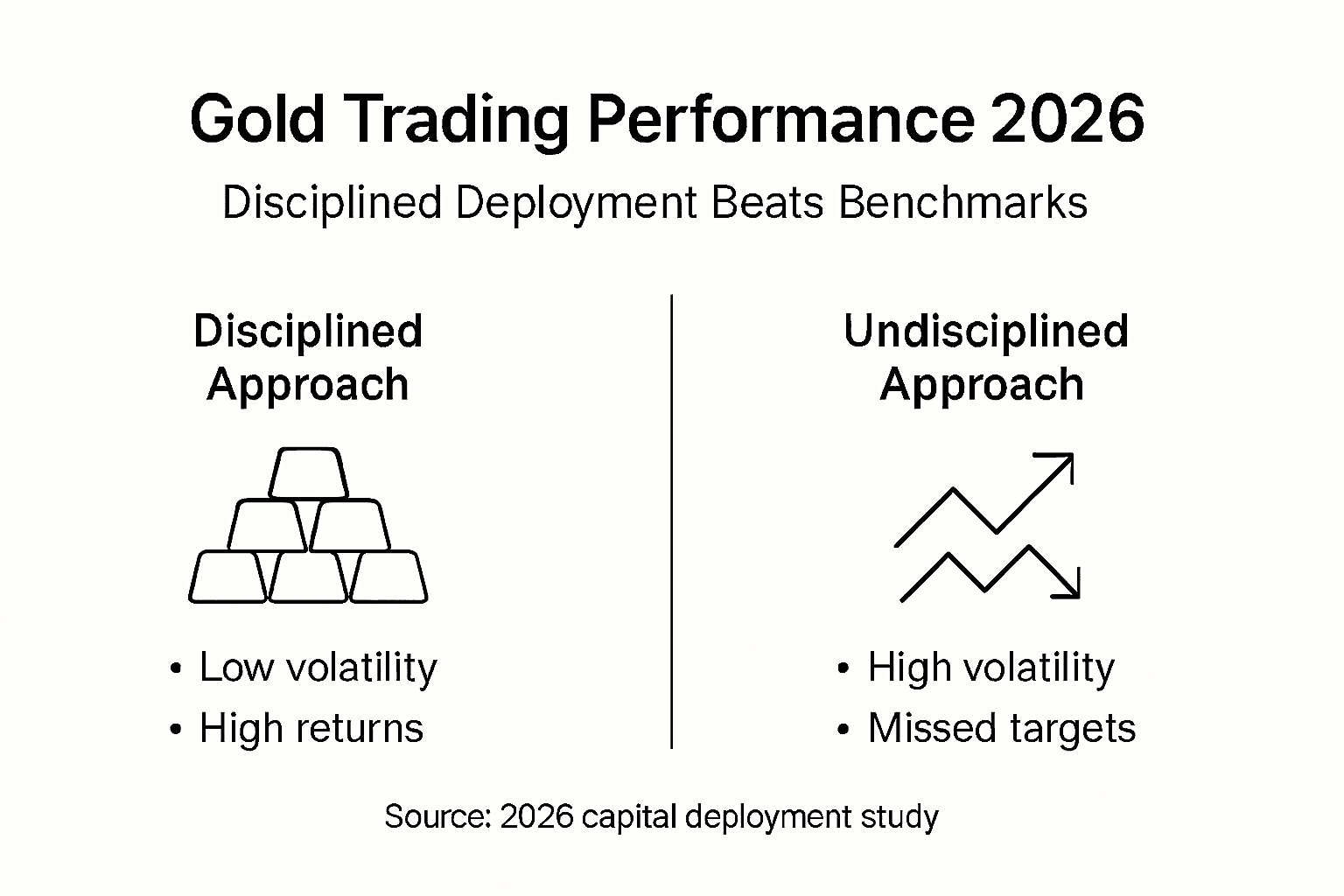
Maintaining trade slippage below 0.1% correlates strongly with higher execution effectiveness. Track this metric daily across all instruments. Rising slippage signals deteriorating market conditions or poor execution quality that requires immediate attention. Slippage above 0.15% consistently predicts underperformance in subsequent periods.
Expect learning curves when implementing new strategies. Most institutional investors require six to nine months to fully optimize their capital deployment processes. During this period, returns may lag as you refine algorithms, adjust position sizing, and improve execution timing. Commit to the process rather than abandoning strategies after short-term setbacks.
Explore Galami Gold’s Solutions for Institutional Investors
You now understand the frameworks that separate successful capital deployment from costly mistakes. Applying these principles requires platforms designed specifically for institutional needs. Galami Gold provides the infrastructure, market intelligence, and transparent operations that sophisticated investors demand.

Our advanced trading platforms deliver the low-latency execution and real-time data feeds essential for timing trades effectively. Access gold market insights curated by experienced analysts who track the macroeconomic catalysts driving gold prices. These insights help you position capital ahead of major market moves rather than reacting after the fact.
Benefit from audited physical gold investment options that combine tangible asset security with institutional-grade custody and insurance. Our transparent supply chain management ensures your gold originates from certified conflict-free sources and maintains proper documentation throughout its lifecycle. Explore comprehensive gold investment strategy guides that help you build diversified portfolios aligned with your return targets and risk tolerance. Ready to optimize your gold capital deployment? Invest in physical gold with Galami Gold and experience the difference disciplined execution makes.
Frequently Asked Questions About Capital Deployment in Gold Trading
How is capital deployment timing optimized for gold trading?
Optimal timing combines macroeconomic event calendars with technical liquidity analysis. Deploy capital during high-liquidity windows in New York and London trading hours, positioning ahead of scheduled Fed announcements and inflation reports that historically move gold prices.
What are the main liquidity risks in physical gold allocations?
Physical gold cannot be sold quickly without significant price discounts during market stress. Large positions require weeks to liquidate through proper channels, creating opportunity costs when you need to reallocate capital rapidly to capture emerging opportunities.
How does leveraging affect risk in gold trading portfolios?
Leverage above 2:1 magnifies losses during adverse moves and increases margin call risk. Conservative leverage preserves capital during drawdowns and allows you to maintain positions through temporary volatility without forced liquidation at unfavorable prices.
What technologies improve transparency in gold trading operations?
Blockchain audit trails create immutable transaction records that eliminate disputes about trade timing and pricing. Real-time portfolio valuation systems and automated compliance monitoring reduce operational errors while satisfying regulatory reporting requirements.
What are realistic performance expectations following disciplined deployment?
Disciplined strategies typically deliver 2% annual outperformance versus benchmarks with 20% lower volatility. Expect six to nine months of refinement before achieving consistent results as you optimize execution algorithms and position sizing rules.
Recommended

Comments