


Build trust in gold trading platforms for 2026 investors
- Shannon B
- Mar 10
- 11 min read


Institutional portfolios typically allocate only about 15% to gold strategically, despite its proven ability to hedge against inflation and market volatility. Trust remains the primary barrier preventing broader adoption of gold trading platforms among sophisticated investors. This guide walks you through verifying physical backing, regulatory compliance, and technology-driven transparency to confidently select platforms that meet institutional standards for risk management and capital deployment.
Table of Contents
Key takeaways
Point | Details |
Trust foundation | Verified physical gold backing and regulatory compliance form the core of platform trustworthiness. |
Technology advantage | Blockchain and independent audits deliver transparency and real-time verification for investor confidence. |
Red flags | Avoid platforms lacking quarterly independent audits or proper regulatory licenses. |
Timeline expectation | Building trust requires 6 to 12 months of consistent audit verification and compliance reporting. |
Investment distinctions | Physical gold trading offers tangible ownership, unlike ETFs or royalty streams with indirect exposure. |
Understanding the importance of trust in gold trading
Gold serves as a critical portfolio component for mitigating risks from inflation, deflation, and market downturns. The metal’s negative correlation with equities and currencies makes it valuable during economic uncertainty. Yet only about 15% of institutional investors hold gold strategically, revealing a significant gap between gold’s theoretical benefits and actual adoption rates.
Trust issues represent the top barrier to broader institutional gold adoption. Investors need assurance that platforms truly hold physical gold, comply with regulations, and protect assets through robust custody arrangements. Without this confidence, even sophisticated investors hesitate to allocate meaningful capital to gold trading programs.
Several misconceptions complicate platform trustworthiness assessment:
Assuming all platforms maintain equivalent audit standards
Believing regulatory oversight guarantees asset safety
Confusing digital certificates with verified physical ownership
Overlooking the importance of insurance and chain of custody protocols
Addressing these trust fundamentals enables institutional investors to confidently evaluate platforms and increase strategic gold allocations. Learn more about why gold matters for institutional investors in 2026 to understand portfolio benefits beyond basic hedging.
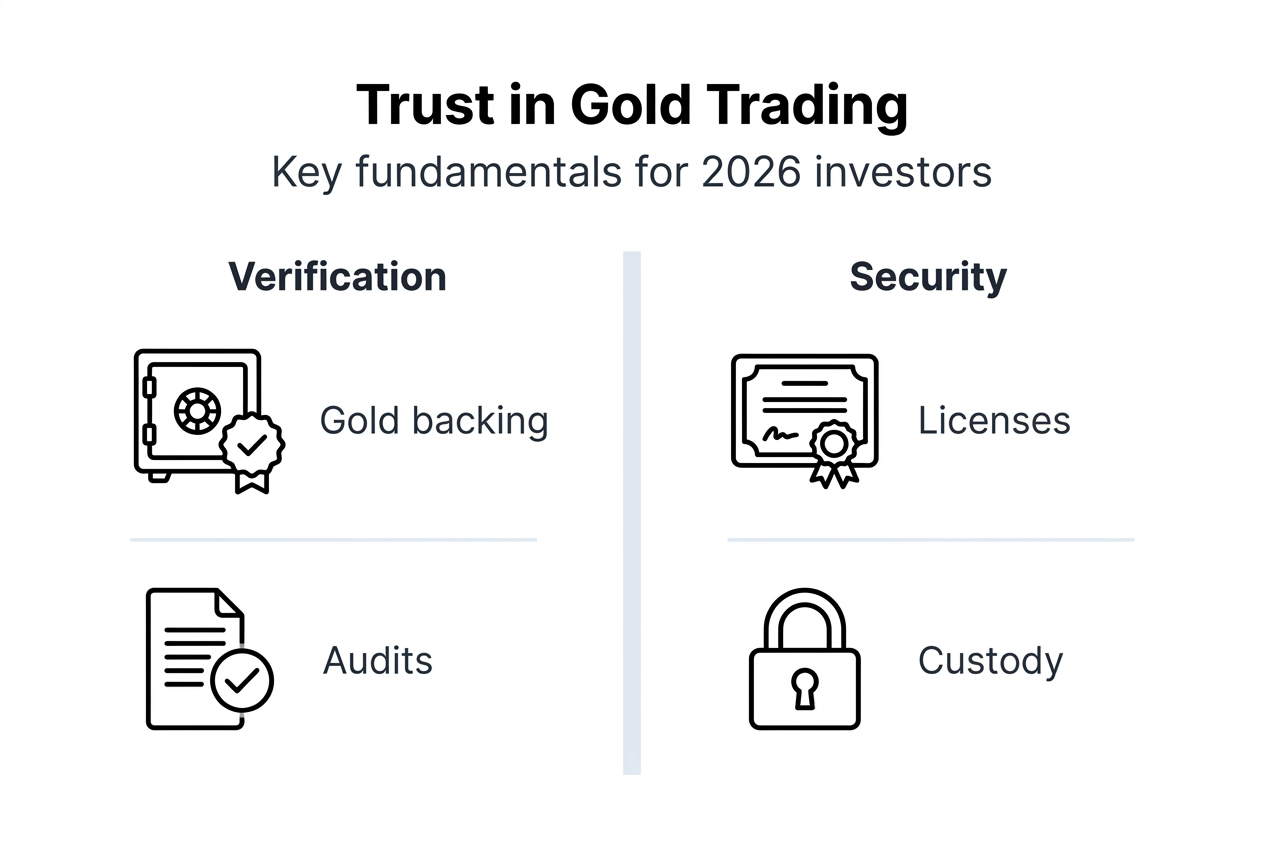
Prerequisites: what you need before engaging in gold trading
Before selecting a gold trading platform, investors must establish foundational knowledge covering instruments, custody mechanisms, and regulatory frameworks. Understanding these elements prevents costly mistakes and enables informed due diligence.
Key preparation areas include:
Familiarity with gold trading instruments like physical bars, allocated accounts, and tokenized representations
Basic custody concepts including allocated versus unallocated storage and vault certification standards
Knowledge of anti-money laundering regulations, know-your-customer requirements, and licensing frameworks across jurisdictions
Ability to interpret third-party audit reports and assess auditor credibility
Regulatory awareness proves especially critical given the complex compliance landscape. Platforms operating across multiple jurisdictions must satisfy various licensing requirements and reporting obligations. Investors who understand these frameworks can better evaluate whether a platform meets institutional standards for legal compliance and risk management.
Transparency standards also require attention. Institutional investors should know what information platforms must disclose, how frequently audits should occur, and which independent firms provide credible verification services. This knowledge forms the baseline for conducting effective platform due diligence.
For detailed regulatory context, review gold trading regulations in 2026 and AML penalties to understand compliance risks platforms must navigate.
Step 1: verify physical gold backing and audits
Verifying that platforms hold physical gold matching their claims represents the most fundamental trust requirement. LBMA-accredited gold bar custody has become the industry standard, ensuring bars meet recognized purity and weight specifications stored in certified vaults.

Independent quarterly vault audits verify physical reserves match platform obligations. Transparent vault audits with third-party verification are critical for building trust in gold-backed platforms. These audits should come from recognized firms like Bureau Veritas, which provide objective assessments of bar counts, weights, and serial number reconciliation.
Key verification elements include:
Confirmation that each digital token or account claim links to specific physical bars
Access to audit reports showing serial numbers, weights, and vault locations
Evidence of 1:1 backing ratios between investor claims and physical inventory
Clear documentation of audit frequency and methodology
Audit Component | What to Verify | Red Flag |
Auditor credentials | Recognized firm with precious metals expertise | Unknown or related-party auditors |
Audit frequency | Quarterly or more frequent | Annual or irregular timing |
Report detail | Bar-level serial numbers and weights | Aggregate totals only |
Public access | Reports available to all investors | Restricted or selective disclosure |
Pro Tip: Request access to the most recent audit report before committing capital. Platforms confident in their backing readily provide detailed documentation to prospective institutional investors.
Understand the broader context of physical gold trading for institutional investors to see how verification fits within overall investment strategies. For case studies demonstrating audit best practices, explore this transparent vault audits analysis.
Step 2: assess regulatory compliance and licensing
Regulatory compliance and proper licensing distinguish legitimate platforms from questionable operators. Institutional investors must verify that platforms hold appropriate licenses from authorities like the CFTC, FCA, or relevant national regulators based on operational jurisdiction.
Licensing requirements vary by region but typically cover:
Commodity trading authorizations for physical gold transactions
Securities licenses if platforms offer investment products
Money transmitter or payment service licenses for facilitating transfers
Compliance with AML and KYC standards mandated by financial regulators
Platforms should maintain transparent compliance and risk management disclosures accessible to investors. This includes documented policies for customer identification, transaction monitoring, and suspicious activity reporting. Regular compliance audits by independent firms add another verification layer beyond regulatory oversight.
Pro Tip: Check regulatory databases directly to confirm license status rather than relying solely on platform claims. Most financial authorities maintain public registries showing active licenses, enforcement actions, and compliance history.
Clear reporting on regulatory adherence demonstrates platform commitment to legal operations. Look for annual compliance statements, regulatory filing confirmations, and evidence of ongoing cooperation with authorities. Platforms operating in regulatory gray areas or jurisdictions with weak oversight present elevated risks regardless of other trust indicators.
Review gold trading regulations in 2026 and AML penalties for current compliance requirements. Understanding why your gold trading platform choice matters helps contextualize regulatory compliance within broader platform selection criteria.
Step 3: evaluate custody, insurance, and security practices
Physical gold custody arrangements directly impact asset safety and investor risk exposure. Platforms should store gold in LBMA-certified vaults or equivalent facilities meeting international security and insurance standards. These vaults employ multiple security layers including armed guards, surveillance systems, and access controls limiting entry to authorized personnel.
Comprehensive insurance coverage protects against theft, natural disasters, and other loss events. Institutional investors should verify:
Insurance policy limits covering full value of stored gold
Identity and financial strength of insurance providers
Claims process and historical settlement track record
Coverage gaps or exclusions that could leave assets unprotected
Chain of custody controls ensure gold remains traceable from initial vault deposit through any transfers or withdrawals. Secure access procedures limit who can authorize movements and require multiple authentication factors for any physical gold transactions. Platforms should document these procedures and demonstrate consistent application across all operations.
Understanding the insurance claims process and platform transparency around security incidents helps assess operational maturity. Platforms that openly communicate about security measures and any historical issues typically demonstrate stronger governance than those providing minimal disclosure.
Explore institutional gold investing considerations for broader custody context. The physical gold trading guide covers custody arrangements in detail for institutional portfolios.
Step 4: utilize technology for transparency and real-time verification
Technology solutions, particularly blockchain, enable transparency levels impossible with traditional gold trading systems. Blockchain technology enables real-time auditability and transparency in gold trading through immutable transaction records accessible to all participants. This creates continuous verification rather than relying solely on periodic audits.
Tokenized gold platforms allow fractional ownership and provide 24/7 liquidity unavailable with traditional physical gold holdings. Investors can trade portions of gold bars, access markets globally, and settle transactions nearly instantaneously compared to the days required for physical delivery.
Key technology benefits include:
Immutable transaction records preventing retroactive alterations
Real-time audit access showing current holdings and transaction history
Smart contracts automating ownership transfers and compliance checks
Reduced counterparty risk through transparent, verifiable processes
Implementing these technologies requires careful execution:
Verify blockchain networks use established, secure protocols
Confirm smart contracts undergo independent security audits
Ensure private keys and custody controls meet institutional security standards
Test platform interfaces and verify transaction finality mechanisms
Understand disaster recovery procedures for technology failures
While technology enhances transparency, it introduces new risks around cybersecurity, technical failures, and regulatory uncertainty. Platforms must balance innovation with robust security and compliance frameworks.
For technical implementation details, review this tokenized gold trading platform analysis covering architecture and security considerations.
Common mistakes and how to troubleshoot them
Institutional investors frequently make avoidable errors when selecting gold trading platforms, leading to trust breakdowns and potential losses. 40% of institutional investors avoid platforms lacking transparency and clear asset backing, highlighting how common these issues remain.
Typical mistakes and solutions:
Accepting platforms without independent quarterly audits. Always require recent audit reports from recognized third-party firms before committing capital. Platforms unable or unwilling to provide audits lack basic transparency standards.
Failing to confirm clear, verifiable physical gold backing documents. Request specific documentation linking your investment to identifiable gold bars with serial numbers and vault locations. Vague assurances about gold holdings signal potential problems.
Engaging unlicensed or gray area regulatory entities. Verify license status directly with regulatory authorities rather than accepting platform claims. Operating without proper licenses exposes investors to legal and financial risks.
Neglecting to monitor audit frequency and dispute resolutions. Establish ongoing monitoring procedures rather than conducting due diligence only at onboarding. Regular review catches deteriorating conditions before problems escalate.
Pro Tip: Create a standardized due diligence checklist covering audits, licensing, insurance, and technology security. Apply this consistently across all platform evaluations to ensure comprehensive assessment and enable meaningful comparisons.
When issues arise, document concerns and escalate promptly through formal channels. Platforms with strong governance respond quickly and transparently to investor inquiries. Delays, evasive responses, or refusal to address concerns indicate deeper problems warranting immediate action.
Learn risk management approaches for gold trading to contextualize platform risks within broader portfolio management. The CFA Institute investor trust report provides additional perspective on transparency challenges across asset classes.
Expected outcomes and timeframes for building trust
Trust in gold trading platforms generally takes 6 to 12 months through consistent audits and transparent reporting. This timeline allows investors to observe multiple audit cycles, review regulatory compliance updates, and assess platform operational stability under various market conditions.
Key trust milestones include:
Independent quarterly audits confirming ongoing physical gold backing and accurate reconciliation
Regulatory compliance reports demonstrating maintained licenses and clean enforcement records
Real-time transaction auditability via blockchain or similar technology platforms
Responsive customer service and transparent communication during market volatility
Timeframe | Expected Evidence | Trust Level |
0 to 3 months | Initial audit review, license verification, custody documentation | Preliminary validation |
3 to 6 months | Second audit cycle, compliance reporting, operational track record | Growing confidence |
6 to 12 months | Multiple audit cycles, consistent transparency, proven security | Established trust |
12+ months | Long-term performance, institutional peer adoption, expanded allocations | Full institutional confidence |
Increased institutional allocations indicate growing trust as more sophisticated investors validate platform credibility through their own due diligence. Platforms earning trust from recognized institutional investors demonstrate operational maturity and governance quality attracting additional capital.
Investors should expect platforms to maintain consistent transparency throughout the relationship, not just during initial onboarding. Deteriorating audit quality, compliance lapses, or reduced disclosure signal eroding trustworthiness requiring immediate attention.
Understand trust dynamics in gold investment for broader context beyond platform selection. The digital finance trust analysis explores how new technologies impact traditional trust-building timelines.
Alternative approaches and tradeoffs in gold trading
Institutional investors face multiple options for gold exposure, each offering distinct advantages and limitations compared to physical gold trading platforms. Gold ETFs offer liquidity but less direct asset visibility, while physical platforms provide tangible ownership requiring robust custody arrangements.
Gold ETFs provide ease of trading through standard brokerage accounts and high liquidity matching equity markets. However, investors hold shares in a fund rather than direct gold ownership, creating layers between the investor and physical assets. Transparency depends on fund disclosure practices, which vary significantly across providers.
Royalty streams and mining company investments generate income through gold production economics but lack direct physical asset custody. These approaches expose investors to operational risks, management quality, and production variables beyond pure gold price movements. They serve different portfolio objectives than direct gold ownership.
Direct physical gold platforms offer true ownership with clear title to specific bars stored in certified vaults. This approach requires rigorous custody verification and audit practices but delivers unambiguous asset claims. Investors accept reduced liquidity compared to ETFs in exchange for transparent, direct ownership.
Approach | Liquidity | Transparency | Custody Complexity | Best For |
Physical Gold Platforms | Moderate | High with audits | High | Direct ownership priority |
Gold ETFs | High | Moderate | Low for investor | Trading flexibility |
Royalty Streams | Low to moderate | Varies | None | Income generation |
Mining Equities | High | Moderate | None | Leveraged gold exposure |
Investors must weigh liquidity requirements against transparency preferences and custody risk tolerance. Platforms offering tokenized physical gold increasingly bridge the gap, delivering near-ETF liquidity while maintaining direct physical backing verification.
Portfolio construction often combines approaches to balance objectives. Core holdings in verified physical platforms provide stable, transparent exposure while ETF positions enable tactical trading around price movements. This hybrid strategy captures benefits across multiple gold investment vehicles.
Compare trading gold versus other metals for institutional portfolio context. The PGIM institutional gold investing analysis provides detailed comparisons across gold investment approaches.
Explore reliable gold trading with Galami Gold
After understanding trust fundamentals in gold trading platforms, institutional investors need partners demonstrating these principles in practice. Galami Gold offers LBMA-accredited custody and independent quarterly audits verifying physical gold backing for every investor claim. The platform maintains full regulatory compliance with licensing requirements across operating jurisdictions, meeting institutional standards for legal operations and risk management.

Galami Gold utilizes advanced technology delivering real-time transparency while maintaining robust security protocols protecting physical assets. The platform supports portfolio diversification strategies with secure, audited gold holdings designed for sophisticated investors requiring institutional-grade operations. Explore Galami Gold’s audited physical gold trading solutions to see how verified transparency and disciplined execution create trustworthy precious metals investment opportunities.
FAQ
What defines a trustworthy gold trading platform for institutions?
Trust requires independent custodial audits conducted quarterly by recognized firms like Bureau Veritas, proper regulatory licenses from authorities such as CFTC or FCA, and transparent reporting accessible to all investors. Verified physical gold backing with documented 1:1 ratios between investor claims and vault inventory forms the foundation. Compliance with AML and KYC regulations demonstrates legal operations meeting institutional standards.
How often should audits be conducted to maintain trust?
Trusted platforms perform independent audits at least quarterly to ensure transparency and verify physical gold holdings. More frequent audits provide additional confidence but quarterly cycles represent the industry minimum for institutional-grade operations. Consistent audit timing and public disclosure of results build and maintain investor confidence over the 6 to 12 month trust development period.
What role does blockchain play in gold trading transparency?
Blockchain provides immutable records and real-time auditability, enhancing trust through continuously accessible transaction histories and ownership verification. The technology enables fractional ownership of physical bars and provides 24/7 liquidity unavailable with traditional gold holdings. Smart contracts automate compliance checks and ownership transfers, reducing counterparty risk while maintaining transparent, verifiable processes for institutional investors.
Are gold ETFs as trustworthy as physical gold platforms?
Gold ETFs offer liquidity but less direct asset backing visibility compared to physical gold platforms with independent vault audits. ETFs provide shares in funds holding gold rather than direct ownership of specific bars, creating intermediary layers affecting transparency. Physical platforms deliver tangible ownership with clear title to identified bars but require robust custody arrangements and due diligence. Trust depends on different verification mechanisms, with physical platforms emphasizing audit transparency while ETFs rely on fund governance and regulatory oversight.
Recommended


As a reader I found the discussion on trust in gold trading platforms for 2026 very engagingThe part about third party audits of gold reserves stood out because it highlights accountability and transparencyI also noticed how investor education is becoming important and Online Assignment Help Company dedicated to providing premium tailored academic support for university students across all major Australian cities appears in discussions about broader digital learning support and market awarenessI am curious whether more platforms will adopt real proof of reserves in the coming yearsIt feels like trust will remain the key factor for investors choosing where to tradeOverall the article gives a clear reminder that transparency and verification are shaping the future of gold investment platforms